

About Detection switch
This page explains the basic principles, applications, and selection criteria for detection switches used in electronic devices, home appliances, and industrial equipment.
In recent years, control circuits in electronic devices have become increasingly low-voltage and energy-efficient, leading to a growing demand for higher contact reliability in switches used to detect position and status.
Shinmei Electric’s detection switches feature a compact design that ensures stable detection even in the micro-signal range.
Basics of Detection Switch
-
About Detection switch
A detection switch is a switch that mechanically detects the position, movement, or mounting status of an object and transmits this information as an electrical signal to a control circuit.
It is used as an “input device for accurately determining the status” in the safe operation and automatic control of equipment. -
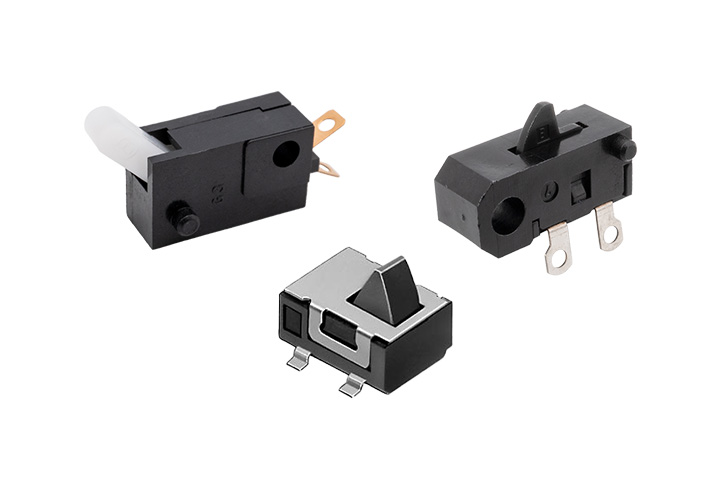
Detection switch designed for detecting minute signals
In the input circuits of electronic devices, the current flowing through them can be extremely small.
Examples: Microcontroller input signals, detection inputs on control boards, and status monitoring in energy-saving devices.
In such environments, unstable contact conditions can lead to false detections or signal errors.
Shinmei Electric’s detection switches achieve stable conduction performance even in the microcurrent range
by optimizing their contact structure.
Key Features of the Detection Switch
-
1. Stable detection even with minute signals
It minimizes contact resistance fluctuations even in low-current circuits, ensuring reliable signal input.
2. Compact, space-saving design
Ideal for installation in the limited space inside electronic devices.
3. Low-Force Design
Capable of detecting even light contact, making it highly compatible with compact mechanisms.
4. Quiet Operation
Smooth contact action minimizes device operating noise.
-
-
1. Home Appliances
Cartridge Detection Internal Unit Installation Check
-
2. Office Automation & Information Technology Equipment Lid Open/Close Detection

-
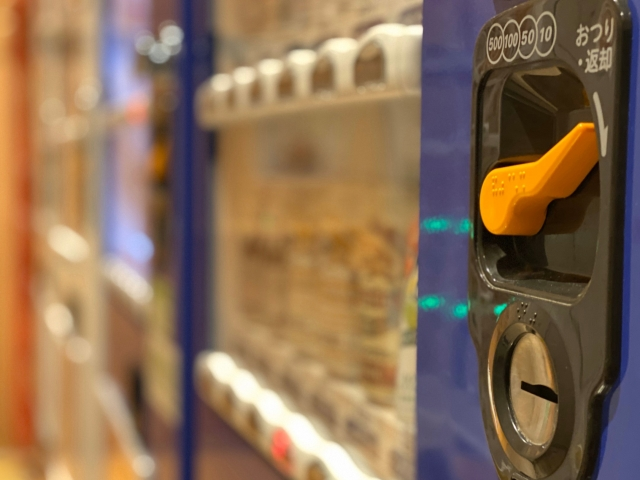
3. Industrial equipment Origin Position Detection Check for Work
-
4. Electronic devices Module and card insertion detection Confirmation of Facility Location

-
How the Detection Switch Works
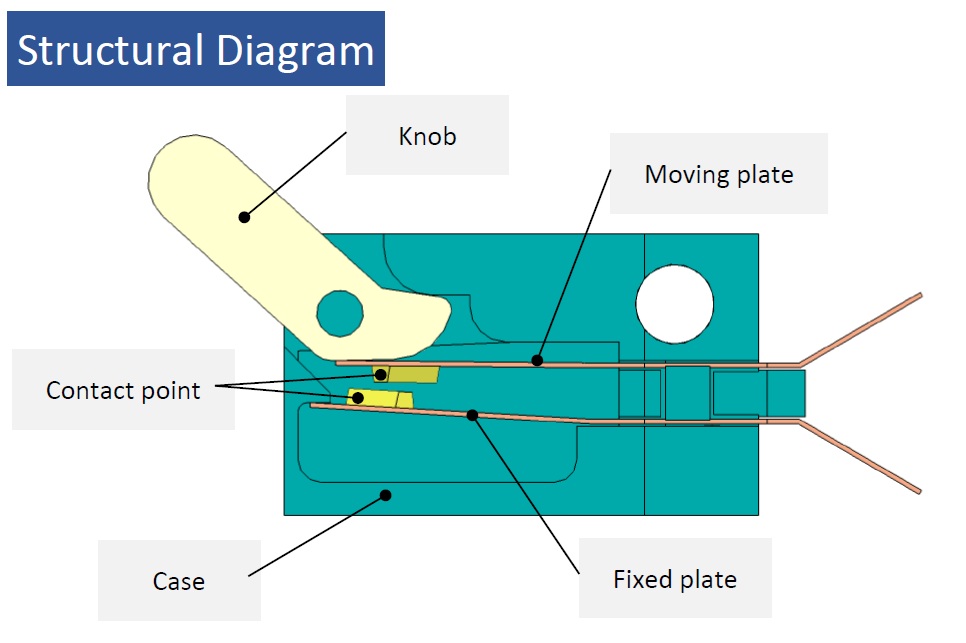
When an object presses the actuator, the internal contacts switch, sending an ON/OFF signal to the control circuit.
Because this detection method relies on mechanical contact,
it is less susceptible to noise,
provides clear detection status,
and requires no standby power.
Key Considerations When Selecting a Detection Switch
1.Minimum Operating Current
For low-current applications, it is important to verify the contact specifications.
2.Contact Reliability
Verify the stability of contact resistance during long-term use.
3.Operating Environment
Select a design suitable for the temperature, dust, and vibration conditions.
4.Mounting Conditions
Verify compatibility with the device design, including PCB mounting, lead wires, and terminal shapes.
Shinmei Electric's Detection Switch
Features
1.Contact design optimized for low-signal applications
2.Compact, highly reliable structure
3.Compatibility with a wide range of actuators
4.High mass-production stability
Why Shinmei Electric Is Chosen
Leveraging contact technology honed through years of mechanical switch development, we deliver the high reliability required for detection applications.
Our products have been widely adopted in the home appliance, office automation, and industrial equipment sectors.